


Prof. Morrison (Rehm) is Director of the Institute of Cell Biology and Immunology at the University of Stuttgart.
Research Overview
We are interested in the complexity of cellular signal transduction that controls cell fate decisions between death and survival. The underlying molecular processes and their perturbation have profound implications in health and disease and can form the basis for the identification of therapeutic intervention points. We therefore not only aim to obtain fundamental insight into the regulation of molecularly controlled cell death processes but also develop novel cell biological tools and mathematical models that assist us in describing and predicting the efficacy of novel drugs and drug combinations for the treatment of cancer. Our team is profoundly interdisciplinary and combines a wide array of techniques from the fields of cell biology, biochemistry, biophysics, bioinformatics and systems biology. Besides addressing fundamental research questions, we collaborate with clinical and private sector partners across Europe to translate our findings into innovative tools and applications for the benefit of the public.
Current major research consortia and collaboration partners:
- EU Horizon 2020 GLIO-TRAIN
- SimTech Cluster of Excellence
- SFB Regulation of Cell Death Decisions
- GRK3112 EpiSignal

Vacancies:
BSc/MSc thesis work: Places are limited. Students interested in conducting research projects towards a BSc or MSc thesis should get in touch at an early stage.
PhD/Doctoral thesis, Postdoctoral positions: Vacancies are advertised on the institute website and on EURAXESS. We are happy to support highly qualified and competitive candidates that wish to apply for fellowship funding programs to join our research team.
Requirements: We are looking for highly motivated, passionate candidates with a strong work ethic that pay attention to accuracy and precision. Prior experience in either experimental or mathematical methodologies relevant for our research programs is beneficial. Our team is very international and interdisciplinary, so we expect a willingness to interact and communicate across cultural and disciplinary boundaries within our institute and with our international collaborators.

Cellular Stress and Cell Death Decisions
Our cells continuously experience stress, and billions of cells decide to die within each of us every day. In our cells, complex molecular signaling networks sense and integrate complex stress signals and convert these into binary decisions between death and survival. Failure to activate molecular signaling networks that culminate in cell death is a hallmark of proliferative diseases such as cancer, whereas excessive cell death manifests in degenerative diseases.
We aim to understand the intricate balance between death and survival decisions at the tissue, cellular and molecular level. Knowledge about the mechanisms underlying stress sensing and death decisions in health and disease not only provides us with novel insight into fundamental biological processes but also paves the way for targeted interventions that can enhance or prevent cell death. Ultimately, this provides us with biologically defined rationales for the development and testing of novel therapeutics.
Insight into cellular decision making at the level of signaling systems
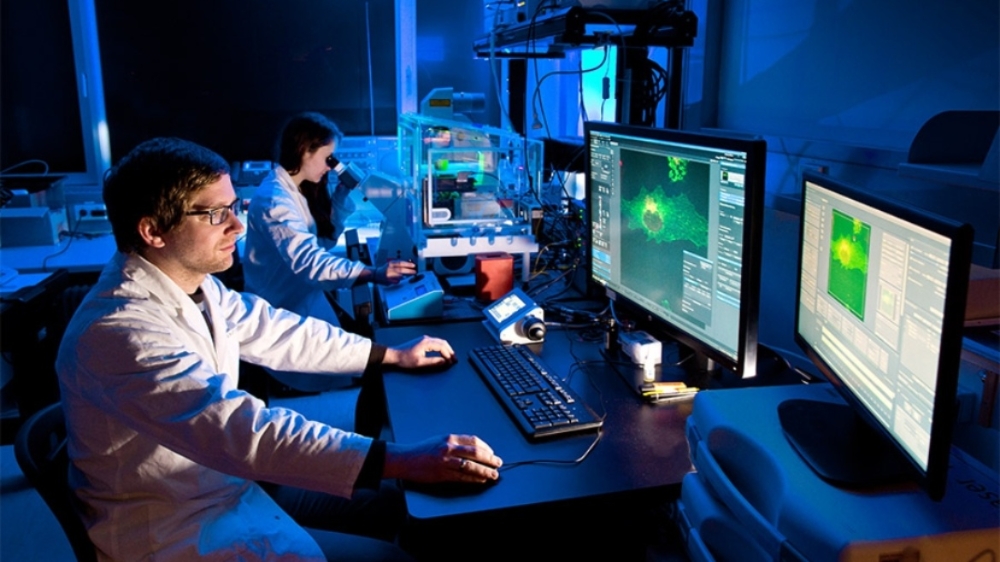
How can cells convert complex, analogue stress signals and therapeutic perturbations into strict and irreversible death decisions? Interestingly, the molecular interplay at the level of entire signaling systems controls these decisions, rather than individual genes or proteins. We therefore study signal transduction and decision making within the complexity of its natural context. In particular, we use high-end microscopy applications and specific fluorescent reporters to study signal transduction in real time inside of individual living cells. In addition, we develop mathematical models (deterministic, stochastic, data-driven) to simulate and better understand the intricate, non-linear signaling that governs cell death decisions. In combination, these approaches also assist us in identifying optimal intervention points to modulate or re-activate cell death processes where these are no longer functioning. This paves the way for the future optimization and personalization of treatments based on systems-level signal transduction knowledge, with particular use cases in the field of cancer therapy.
From Mechanisms to Applications
Can knowledge on cellular decision making assist us in better prognosticating disease progression or in predicting treatment success? Can we contribute to and improve personalized patient care by reliably forecasting the efficacy of current and novel treatment options? We address these questions in collaboration with private sector and clinical research partners. In particular, we study the signaling hubs of cell death and survival processes in patient tumors, using both transcriptomic and proteomic data, to define the individual likelihood to respond to therapies. Importantly, we integrate our mathematical models into these pipelines, with a view towards establishing novel systems medicine solutions. Our prior work in colorectal cancer, melanoma and glioblastoma demonstrated that combining information on cellular signaling with clinico-pathological and individual patient data has the potential to significantly contribute to personalizing treatment decisions in the future.
Publications
- Klötzer, F., Stöhr, D., & Rehm, M. (2026). Chapter Two - Semi-automated, quantitative immunofluorescence analysis of single cell cytochrome c release during apoptotic cell death. In M. Beltrán-Visiedo, E. Guilbaud, R. Soler-Agesta, & L. Galluzzi (Eds.), Cell Death - Part B (Vol. 206, pp. 23–42). Academic Press. https://doi.org/10.1016/bs.mcb.2026.03.002
- Mora-Molina, R., El Yousfi, Y., Hagenlocher, C., Fernández-Farrán, F. J., Rehm, M., Palacios, C., Christophorou, M. A., & López-Rivas, A. (2026). REDD1/DDIT4 counteracts endoplasmic reticulum stress-induced apoptosis by controlling the expression of death receptor TRAILR2/DR5 in cancer cells. Cell Death & Disease. https://doi.org/10.1038/s41419-026-08648-7
- Klötzer, F., Pollak, N., Baatz, A., Kisakol, B., Ginty, F., Longley, D. B., Prehn, J. H. M., & Rehm, M. (2026). Spatiotemporal dynamics of Mcl-1 abundance and its influence on apoptosis susceptibility. bioRxiv. https://doi.org/10.64898/2026.02.06.704006
- Hüther, J. A., Mallais, M., Rehm, M., & Pratt, D. A. (2026). Implementation of the FENIX assay to screen for and assess inhibitors of lipid peroxidation and associated ferroptosis. Methods in Cell Biology. https://doi.org/10.1016/bs.mcb.2026.01.013
- Geiger, J., Klötzer, F., Pollak, N., Fullstone, G., & Rehm, M. (2025). Stochasticity contributes to explaining minority and majority MOMP during apoptosis. Cell Death & Disease, 16, Article 1. https://doi.org/10.1038/s41419-025-08258-9
- Blum, J., Brüll, M., Hengstler, J. G., Dietrich, D. R., Gruber, A. J., Dipalo, M., Kraushaar, U., Mangas, I., Terron, A., Fritsche, E., Marx-Stoelting, P., Hardy, B., Schepky, A., Escher, S., Hartung, T., Landsiedel, R., Odermatt, A., Sachana, M., Koch, K., et al. (2025). The long way from raw data to NAM-based information: Overview on data layers and processing steps. ALTEX - Alternatives to Animal Experimentation, 42, Article 1. https://doi.org/10.14573/altex.2412171
- Kuhn, P., Petralla, S., Dabbagh, F., Pegoretti, V., Muranyi, W., Ishikawa, H., Schroten, H., Fischer, R., Frenzel, A., Schirrmann, T., Rehm, M., Schwerk, C., Fricker, G., Kontermann, R., & Fullstone, G. (2025). A pH-sensitive binding modality allows successful transferrin receptor-mediated transcytosis of a bivalent antibody across brain barriers. mAbs, 17, Article 1. https://doi.org/10.1080/19420862.2025.2563758
- Qiu, Y., Hüther, J. A., Wank, B., Rath, A., Tykwe, R., Aldrovandi, M., Henkelmann, B., Mergner, J., Nakamura, T., Laschat, S., Conrad, M., Stöhr, D., & Rehm, M. (2025). Interplay of ferroptotic and apoptotic cell death and its modulation by BH3-mimetics. Cell Death & Differentiation. https://doi.org/10.1038/s41418-025-01514-7
- Boccellato, C., & Rehm, M. (2024). TRAIL-induced apoptosis and proteasomal activity – Mechanisms, signalling and interplay. Biochimica et Biophysica Acta (BBA) - Molecular Cell Research, 119688. https://doi.org/10.1016/j.bbamcr.2024.119688
- Entrop, K., Wieske, S., & Rehm, M. (2024). Why Bax detection in >1400 publications might be flawed. Cell Death & Disease, 15, Article 12. https://doi.org/10.1038/s41419-024-07273-6
- Beigl, T. B., Paul, A., Fellmeth, T. P., Nguyen, D., Barber, L., Weller, S., Schäfer, B., Gillissen, B. F., Aulitzky, W. E., Kopp, H.-G., Rehm, M., Andrews, D. W., Pluhackova, K., & Essmann, F. (2024). BCL-2 and BOK regulate apoptosis by interaction of their C-terminal transmembrane domains. EMBO Reports, 25, Article 9. https://doi.org/10.1038/s44319-024-00206-6
- Guttà, C., Morhard, C., & Rehm, M. (2023). Applying a GAN-based classifier to improve transcriptome-based prognostication in breast cancer. PLOS Computational Biology, 19, Article 4. https://doi.org/10.1371/journal.pcbi.1011035
- Vitale, I., Pietrocola, F., Guilbaud, E., Aaronson, S. A., Abrams, J. M., Adam, D., Agostini, M., Agostinis, P., Alnemri, E. S., Altucci, L., Amelio, I., Andrews, D. W., Aqeilan, R. I., Arama, E., Baehrecke, E. H., Balachandran, S., Bano, D., Barlev, N. A., Bartek, J., et al. (2023). Apoptotic cell death in disease---Current understanding of the NCCD 2023. Cell Death & Differentiation, 30, Article 5. https://doi.org/10.1038/s41418-023-01153-w
- Fullstone, G. (2023). Rapid Particle-Based Simulations of Cellular Signalling with the FLAME-Accelerated Signalling Tool (FaST) and GPUs. In Computational Modeling of Signaling Networks (pp. 191–212). Springer US. https://doi.org/10.1007/978-1-0716-3008-2_9
- Hagenlocher, C., Siebert, R., Taschke, B., Wieske, S., Hausser, A., & Rehm, M. (2022). ER stress-induced cell death proceeds independently of the TRAIL-R2 signaling axis in pancreatic β cells. Cell Death Discovery, 8, Article 1. https://doi.org/10.1038/s41420-022-00830-y
- Guttà, C., Morhard, C., & Rehm, M. (2022). Applying GAN-based data augmentation to improve transcriptome-based prognostication in breast cancer. In medRxiv. Cold Spring Harbor Laboratory Press. https://doi.org/10.1101/2022.10.07.22280776
- Mora-Molina, R., Stöhr, D., Rehm, M., & López-Rivas, A. (2022). cFLIP downregulation is an early event required for endoplasmic reticulum stress-induced apoptosis in tumor cells. Cell Death & Disease, 13, Article 2. https://doi.org/10.1038/s41419-022-04574-6
- Guttà, C., Morhard, C., & Rehm, M. (2022, October). T-GAN-D: a GAN-based classifier for breast cancer prognostication [Zenodo]. https://doi.org/10.5281/zenodo.7151831
- Boccellato, C., & Rehm, M. (2022). Glioblastoma, from disease understanding towards optimal cell-based in vitro models. Cellular Oncology. https://doi.org/10.1007/s13402-022-00684-7
- Hellwig, C. T., Delgado, M. E., Skoko, J., Dyck, L., Hanna, C., Wentges, A., Langlais, C., Hagenlocher, C., Mack, A., Dinsdale, D., Cain, K., MacFarlane, M., & Rehm, M. (2021). Proteasome inhibition triggers the formation of TRAIL receptor 2 platforms for caspase-8 activation that accumulate in the cytosol. Cell Death & Differentiation 2021, 1–9. https://doi.org/10.1038/s41418-021-00843-7
- Juric, V., Düssmann, H., Lamfers, M. L. M., Prehn, J. H. M., Rehm, M., & Murphy, B. M. (2021). Transcriptional CDK Inhibitors CYC065 and THZ1 Induce Apoptosis in Glioma Stem Cells Derived from Recurrent GBM. Cells 2021, Vol. 10, Page 1182, 10, Article 5. https://doi.org/10.3390/cells10051182
- Lindner, A. U., Salvucci, M., McDonough, E., Cho, S., Stachtea, X., O’Connell, E. P., Corwin, A. D., Santamaria-Pang, A., Carberry, S., Fichtner, M., Van Schaeybroeck, S., Laurent-Puig, P., Burke, J. P., McNamara, D. A., Lawler, M., Sood, A., Graf, J. F., Rehm, M., Dunne, P. D., et al. (2021). An atlas of inter- and intra-tumor heterogeneity of apoptosis competency in colorectal cancer tissue at single-cell resolution. Cell Death & Differentiation. https://doi.org/10.1038/s41418-021-00895-9
- Ehlers, W., Morrison (Rehm), M., Schröder, P., Stöhr, D., & Wagner, A. (2021). Multiphasic modelling and computation of metastatic lung-cancer cell proliferation and atrophy in brain tissue based on experimental data. Biomechanics and Modeling in Mechanobiology. https://doi.org/10.1007/s10237-021-01535-4
- McCann, C., Matveeva, A., McAllister, K., Sessler, T., Fichtner, M., Carberry, S., Rehm, M., Prehn, J. H. M., & Longley, D. B. (2021). Development of a protein signature to enable clinical positioning of IAP inhibitors in colorectal cancer. The FEBS Journal, febs. https://doi.org/10.1111/febs.15801
- Juric, V., Hudson, L., Fay, J., Richards, C. E., Jahns, H., Verreault, M., Bielle, F., Idbaih, A., Lamfers, M. L. M., Hopkins, A. M., Rehm, M., & Murphy, B. M. (2021). Transcriptional CDK inhibitors, CYC065 and THZ1 promote Bim-dependent apoptosis in primary and recurrent GBM through cell cycle arrest and Mcl-1 downregulation. Cell Death & Disease 2021 12:8, 12, Article 8. https://doi.org/10.1038/s41419-021-04050-7
- Stöhr, D., Schmid, J. O., Beigl, T. B., Mack, A., Maichl, D. S., Cao, K., Budai, B., Fullstone, G., Kontermann, R. E., Mürdter, T. E., Tait, S. W. G., Hagenlocher, C., Pollak, N., Scheurich, P., & Rehm, M. (2020). Stress-induced TRAILR2 expression overcomes TRAIL resistance in cancer cell spheroids. Cell Death & Differentiation. https://doi.org/10.1038/s41418-020-0559-3
- Vetma, V., Guttà, C., Peters, N., Praetorius, C., Hutt, M., Seifert, O., Meier, F., Kontermann, R., Kulms, D., & Rehm, M. (2020). Convergence of pathway analysis and pattern recognition predicts sensitization to latest generation TRAIL therapeutics by IAP antagonism. Cell Death & Differentiation 2020, 1–16. https://doi.org/10.1038/s41418-020-0512-5
- Guttà, C., Rahman, A., Aura, C., Dynoodt, P., Charles, E. M., Hirschenhahn, E., Joseph, J., Wouters, J., de Chaumont, C., Rafferty, M., Warren, M., van den Oord, J. J., Gallagher, W. M., & Rehm, M. (2020). Low expression of pro-apoptotic proteins Bax, Bak and Smac indicates prolonged progression-free survival in chemotherapy-treated metastatic melanoma. Cell Death & Disease, 11, Article 2. https://doi.org/10.1038/s41419-020-2309-3
- Imig, D., Pollak, N., Allgöwer, F., & Rehm, M. (2020). Sample-based modeling reveals bidirectional interplay between cell cycle progression and extrinsic apoptosis. PLOS Computational Biology, 16, Article 6. https://doi.org/10.1371/journal.pcbi.1007812
- White, K., Connor, K., Clerkin, J., Murphy, B. M., Salvucci, M., O’Farrell, A. C., Rehm, M., O’Brien, D., Prehn, J. H. M., Niclou, S. P., Lamfers, M. L. M., Verreault, M., Idbaih, A., Verhaak, R., Golebiewska, A., & Byrne, A. T. (2020). New hints towards a precision medicine strategy for IDH wild-type Glioblastoma. Annals of Oncology. https://doi.org/10.1016/j.annonc.2020.08.2336
- Stöhr, D., & Rehm, M. (2020). Linking hyperosmotic stress and apoptotic sensitivity. The FEBS Journal, febs. https://doi.org/10.1111/febs.15520
- Khawaja, H., Campbell, A., Roberts, J. Z., Javadi, A., O’Reilly, P., McArt, D., Allen, W. L., Majkut, J., Rehm, M., Bardelli, A., Di Nicolantonio, F., Scott, C. J., Kennedy, R., Vitale, N., Harrison, T., Sansom, O. J., Longley, D. B., Evergren, E., & Van Schaeybroeck, S. (2020). RALB GTPase: a critical regulator of DR5 expression and TRAIL sensitivity in KRAS mutant colorectal cancer. Cell Death & Disease, 11, Article 10. https://doi.org/10.1038/s41419-020-03131-3
- Fullstone, G., Guttà, C., Beyer, A., & Rehm, M. (2020). The FLAME-accelerated signalling tool (FaST) for facile parallelisation of flexible agent-based models of cell signalling. Npj Systems Biology and Applications, 6, Article 1. https://doi.org/10.1038/s41540-020-0128-x
- Kuritz, K., Stöhr, D., Maichl, D. S., Pollak, N., Rehm, M., & Allgöwer, F. (2020). Reconstructing temporal and spatial dynamics from single-cell pseudotime using prior knowledge of real scale cell densities. Scientific Reports, 10, Article 1. https://doi.org/10.1038/s41598-020-60400-z
- Stöhr, D., Jeltsch, A., & Rehm, M. (2020). TRAIL receptor signaling: From the basics of canonical signal transduction toward its entanglement with ER stress and the unfolded protein response. Int Rev Cell Mol Biol, 351, 57–99. https://doi.org/10.1016/bs.ircmb.2020.02.002
- Fullstone, G., Bauer, T. L., Guttà, C., Salvucci, M., Prehn, J. H. M., & Rehm, M. (2020). The apoptosome molecular timer synergises with XIAP to suppress apoptosis execution and contributes to prognosticating survival in colorectal cancer. Cell Death & Differentiation. https://doi.org/10.1038/s41418-020-0545-9
- Noonan, J. J., Jarzabek, M., Lincoln, F. A., Cavanagh, B. L., Pariag, A. R., Juric, V., Young, L. S., Ligon, K. L., Jahns, H., Zheleva, D., Prehn, J. H. M., Rehm, M., Byrne, A. T., & Murphy, B. M. (2019). Implementing Patient-Derived Xenografts to Assess the Effectiveness of Cyclin-Dependent Kinase Inhibitors in Glioblastoma. Cancers (Basel), 11, Article 12. https://doi.org/10.3390/cancers11122005
- Tsur, N., Kogan, Y., Rehm, M., & Agur, Z. (2019). Response of Patients with Melanoma to Immune Checkpoint Blockade – Insights Gleaned from Analysis of a New Mathematical Mechanistic Model. Journal of Theoretical Biology, 110033. https://doi.org/10.1016/J.JTBI.2019.110033
- Salvucci, M., Rahman, A., Resler, A. J., Udupi, G. M., McNamara, D. A., Kay, E. W., Laurent-Puig, P., Longley, D. B., Johnston, P. G., Lawler, M., Wilson, R., Salto-Tellez, M., Van Schaeybroeck, S., Rafferty, M., Gallagher, W. M., Rehm, M., & Prehn, J. H. M. (2019). A Machine Learning Platform to Optimize the Translation of Personalized Network Models to the Clinic. JCO Clinical Cancer Informatics, Article 3. https://doi.org/10.1200/CCI.18.00056
- Skoko, J., Rožanc, J., Charles, E. M., Alexopoulos, L. G., & Rehm, M. (2019). Post-treatment de-phosphorylation of p53 correlates with dasatinib responsiveness in malignant melanoma. BMC Cell Biology, 19, Article 1. https://doi.org/10.1186/s12860-018-0180-1
- Podder, B., Guttà, C., Rožanc, J., Gerlach, E., Feoktistova, M., Panayotova-Dimitrova, D., Alexopoulos, L. G., Leverkus, M., & Rehm, M. (2019). TAK1 suppresses RIPK1-dependent cell death and is associated with disease progression in melanoma. Cell Death & Differentiation, 1. https://doi.org/10.1038/s41418-019-0315-8
- Galluzzi, L., Vitale, I., Aaronson, S. A., Abrams, J. M., Adam, D., Agostinis, P., Alnemri, E. S., Altucci, L., Amelio, I., Andrews, D. W., Annicchiarico-Petruzzelli, M., Antonov, A. V., Arama, E., Baehrecke, E. H., Barlev, N. A., Bazan, N. G., Bernassola, F., Bertrand, M. J. M., Bianchi, K., et al. (2018). Molecular mechanisms of cell death: recommendations of the Nomenclature Committee on Cell Death 2018. Cell Death & Differentiation. https://doi.org/10.1038/s41418-017-0012-4
- Almanza, A., Carlesso, A., Chintha, C., Creedican, S., Doultsinos, D., Leuzzi, B., Luís, A., McCarthy, N., Montibeller, L., More, S., Papaioannou, A., Püschel, F., Sassano, M. L., Skoko, J., Agostinis, P., de Belleroche, J., Eriksson, L. A., Fulda, S., Gorman, A. M., et al. (2018). Endoplasmic Reticulum Stress signalling - from basic mechanisms to clinical applications. The FEBS Journal. https://doi.org/10.1111/febs.14608
- Crawford, N., Salvucci, M., Hellwig, C. T., Lincoln, F. A., Mooney, R. E., O’Connor, C. L., Prehn, J. H., Longley, D. B., & Rehm, M. (2018). Simulating and predicting cellular and in vivo responses of colon cancer to combined treatment with chemotherapy and IAP antagonist Birinapant/TL32711. Cell Death & Differentiation. https://doi.org/10.1038/s41418-018-0082-y
- Carberry, S., D’Orsi, B., Monsefi, N., Salvucci, M., Bacon, O., Fay, J., Rehm, M., McNamara, D., Kay, E. W., & Prehn, J. M. H. (2018). The BAX/BAK-like protein BOK is a prognostic marker in colorectal cancer. Cell Death & Disease, 9, Article 2. https://doi.org/10.1038/s41419-017-0140-2
- Lincoln, F. A., Imig, D., Boccellato, C., Juric, V., Noonan, J., Kontermann, R. E., Allgöwer, F., Murphy, B. M., & Rehm, M. (2018). Sensitization of glioblastoma cells to TRAIL-induced apoptosis by IAP- and Bcl-2 antagonism. Cell Death & Disease, 9, Article 11. https://doi.org/10.1038/s41419-018-1160-2
- Apweiler, R., Beissbarth, T., Berthold, M. R., Blüthgen, N., Burmeister, Y., Dammann, O., Deutsch, A., Feuerhake, F., Franke, A., Hasenauer, J., Hoffmann, S., Höfer, T., Jansen, P. L., Kaderali, L., Klingmüller, U., Koch, I., Kohlbacher, O., Kuepfer, L., Lammert, F., et al. (2018). Whither systems medicine? Experimental &Amp; Molecular Medicine, 50, e453––. http://dx.doi.org/10.1038/emm.2017.290
- Rožanc, J., Sakellaropoulos, T., Antoranz, A., Guttà, C., Podder, B., Vetma, V., Rufo, N., Agostinis, P., Pliaka, V., Sauter, T., Kulms, D., Rehm, M., & Alexopoulos, L. (2018). Phosphoprotein patterns predict trametinib responsiveness and optimal trametinib sensitisation strategies in melanoma. Cell Death & Differentiation, 1. https://doi.org/10.1038/s41418-018-0210-8
- Hantusch, A., Rehm, M., & Brunner, T. (2018). Counting on Death - Quantitative aspects of Bcl-2 family regulation. The FEBS Journal. https://doi.org/10.1111/febs.14516
- Hantusch, A., Das, K. K., García-Sáez, A. J., Brunner, T., & Rehm, M. (2018). Bax retrotranslocation potentiates Bcl-xL’s antiapoptotic activity and is essential for switch-like transitions between MOMP competency and resistance. Cell Death & Disease, 9, Article 4. https://doi.org/10.1038/s41419-018-0464-6
- Hantusch, A., Brunner, T., Frickey, T., & Rehm, M. (2017). Bcl-2-Ome-a database and interactive web service for dissecting the Bcl-2 interactome. Cell Death and Differentiation, 24, Article 1. https://doi.org/10.1038/cdd.2016.129
- Vetma, V., Rozanc, J., Charles, E. M., Hellwig, C. T., Alexopoulos, L. G., & Rehm, M. (2017). Examining the In Vitro Efficacy of the IAP Antagonist Birinapant as a Single Agent or in Combination With Dacarbazine to Induce Melanoma Cell Death. Oncology Research Featuring Preclinical and Clinical Cancer Therapeutics, 25, Article 9. https://doi.org/10.3727/096504017x14897145996933
- Schröder, P., Wagner, A., Stöhr, D., Rehm, M., & Ehlers, W. (2017). Data-driven simulation of metastatic processes within brain tissue. Pamm, 17, Article 1. https://doi.org/10.1002/pamm.201710080
- Salvucci, M., Urstle, M. L., Morgan, C., Curry, S., Cremona, M., Lindner, A. U., Bacon, O., Resler, A. J., Murphy, A. C., O’Byrne, R., Flanagan, L., Dasgupta, S., Rice, N., Pilati, C., Zink, E., Scholler, L. M., Toomey, S., Lawler, M., Johnston, P. G., et al. (2017). A stepwise integrated approach to personalized risk predictions in stage III colorectal cancer. Clinical Cancer Research, 23, Article 5. https://doi.org/10.1158/1078-0432.CCR-16-1084
- Hellwig, C. T., Ludwig-Galezowska, A. H., & Rehm, M. (2016). FRET-Based Measurement of Apoptotic Caspase Activities by High-Throughput Screening Flow Cytometry. In P. M. Muganda (Ed.), Apoptosis Methods in Toxicology (pp. 109–130). Springer New York. https://doi.org/10.1007/978-1-4939-3588-8_7
- Weyhenmeyer, B. C., Noonan, J., Würstle, M. L., Lincoln, F. A., Johnston, G., Rehm, M., & Murphy, B. M. (2016). Predicting the cell death responsiveness and sensitization of glioma cells to TRAIL and temozolomide. Oncotarget, 7, Article 38. https://doi.org/10.18632/oncotarget.10973
- Huber, H., Bullinger, E., & Rehm, M. (2009). Systems Biology Approaches to the Study of Apoptosis. In Z. Dong & X.-M. Yin (Eds.), Essentials of Apoptosis: A Guide for Basic and Clinical Research (pp. 283–297). Humana Press. https://doi.org/10.1007/978-1-60327-381-7_12
- Huber, H., Estrada, G., Dussmann, H., connor, C., & Rehm, M. (2007). Extending the explanatory power of live cell imaging by computationally modelling the execution of apoptotic cell death (A. Méndez-Vilas & A. Diaz, Eds.; Vol. 1). Formatex.